

15 Fun Summer Reading Activities Your Child Will Actually Enjoy
Summer break is a time for adventure, relaxation, and making memories, but it doesn't have to mean taking a break from learning. In fact, summer is one of the most important times for children to continue practicing their reading skills.
Many parents worry about the "summer slide," a phenomenon where students lose some of the academic progress they made during the school year. The good news? Reading doesn't have to feel like homework. With a little creativity, reading can become one of the most exciting parts of your child's summer.
If you're looking for engaging reading activities for kids or want to create your own summer reading program at home, these ideas can help keep your child learning while having fun.
Why Summer Reading Matters
Research consistently shows that children who read during the summer are more likely to maintain or improve their reading skills. Even just 15-20 minutes of reading each day can help students build vocabulary, improve comprehension, and develop stronger critical thinking skills.
The key is finding activities that make reading feel like an adventure rather than an assignment.
1. Create a Backyard Reading Camp
Transform your backyard into a reading destination.
Set up:
Blankets
Lawn chairs
A small tent
Flashlights
Snacks
Allow your child to choose a favorite book and spend time reading outdoors. Changing the environment often makes reading feel fresh and exciting.
Bonus Idea: Let your child earn "camp badges" for each book they complete.
2. Visit Your Local Library's Summer Reading Program
Many libraries offer free summer reading programs with:
Reading challenges
Prizes
Story times
Educational events
Children often become more motivated when they can track their progress and earn rewards along the way. Make library visits a weekly family tradition.
3. Host a Family Reading Challenge
Turn reading into a friendly competition.
Create categories such as:
Most books read
Longest reading streak
Most minutes read
Most new vocabulary words learned
Offer simple rewards like:
Choosing family movie night
Picking dinner
Ice cream outings
When the entire family participates, children see reading as a valued activity.
4. Let Your Child Become the Storyteller
After reading a book, ask your child to retell the story in their own words.
Encourage them to:
Act it out
Draw scenes
Create puppets
Make comic strips
This strengthens comprehension and helps children remember what they read.
5. Create a Reading Treasure Hunt

Hide clues around the house or yard.
Each clue should require reading and understanding a short passage before moving to the next location.
Children love solving mysteries, and they won't even realize they're practicing reading skills.
6. Read and Cook Together
Choose books that involve food and then recreate recipes inspired by the story.
Examples:
Pancakes after reading a breakfast story
Homemade pizza after reading an Italian-themed book
Fruit smoothies inspired by a summer adventure book
Reading becomes more meaningful when connected to real-life experiences.
7. Start a Summer Reading Passport
Create a passport where your child "travels" through books.
Each completed book earns a stamp from a different:
Country
State
Historical period
Fantasy world
This encourages children to explore a variety of genres and topics.
8. Listen to Audiobooks During Road Trips
Summer often means family vacations and long car rides.
Audiobooks can:
Improve listening comprehension
Introduce advanced vocabulary
Encourage a love of storytelling
Try listening together and discussing the story afterward.
9. Build a Reading Fort
Few things are more exciting for children than building a fort.
Use:
Blankets
Pillows
Chairs
String lights
Once complete, turn it into a special reading zone.
Children often spend much longer reading when they're in a fun environment.
10. Create a Character Dress-Up Day
After finishing a book, let your child dress as their favorite character.
They can:
Describe the character
Explain the plot
Reenact scenes
This helps improve comprehension while allowing creativity to shine.
11. Write Alternate Endings
Ask your child:
"What would happen if the story ended differently?"
Encourage them to write:
A new ending
A sequel
A new adventure
This develops both reading and writing skills while encouraging imagination.
12. Make Reading Social
Children often enjoy reading more when they can share it with others.
Invite friends or cousins to:
Read the same book
Discuss favorite characters
Share favorite scenes
Think of it as a kid-friendly book club.
13. Read About Topics Your Child Already Loves
Not every child enjoys traditional chapter books.
If your child loves:
Dinosaurs
Sports
Animals
Space
Video games
Find books related to those interests.
When children read about things they enjoy, motivation increases dramatically.
14. Turn Reading Into a Scavenger Hunt
Create a list of things to find in books, such as:
A talking animal
A mystery
A map
A funny character
A new vocabulary word
Children can earn points as they discover each item.
This keeps them actively engaged while reading.
15. Create a Reading Celebration
At the end of summer, celebrate your child's accomplishments.
Ideas include:
A certificate
A special dinner
A trip to a bookstore
A family game night
Recognizing effort helps children build positive associations with reading and learning.
How Much Should Children Read During Summer?
A simple goal is:
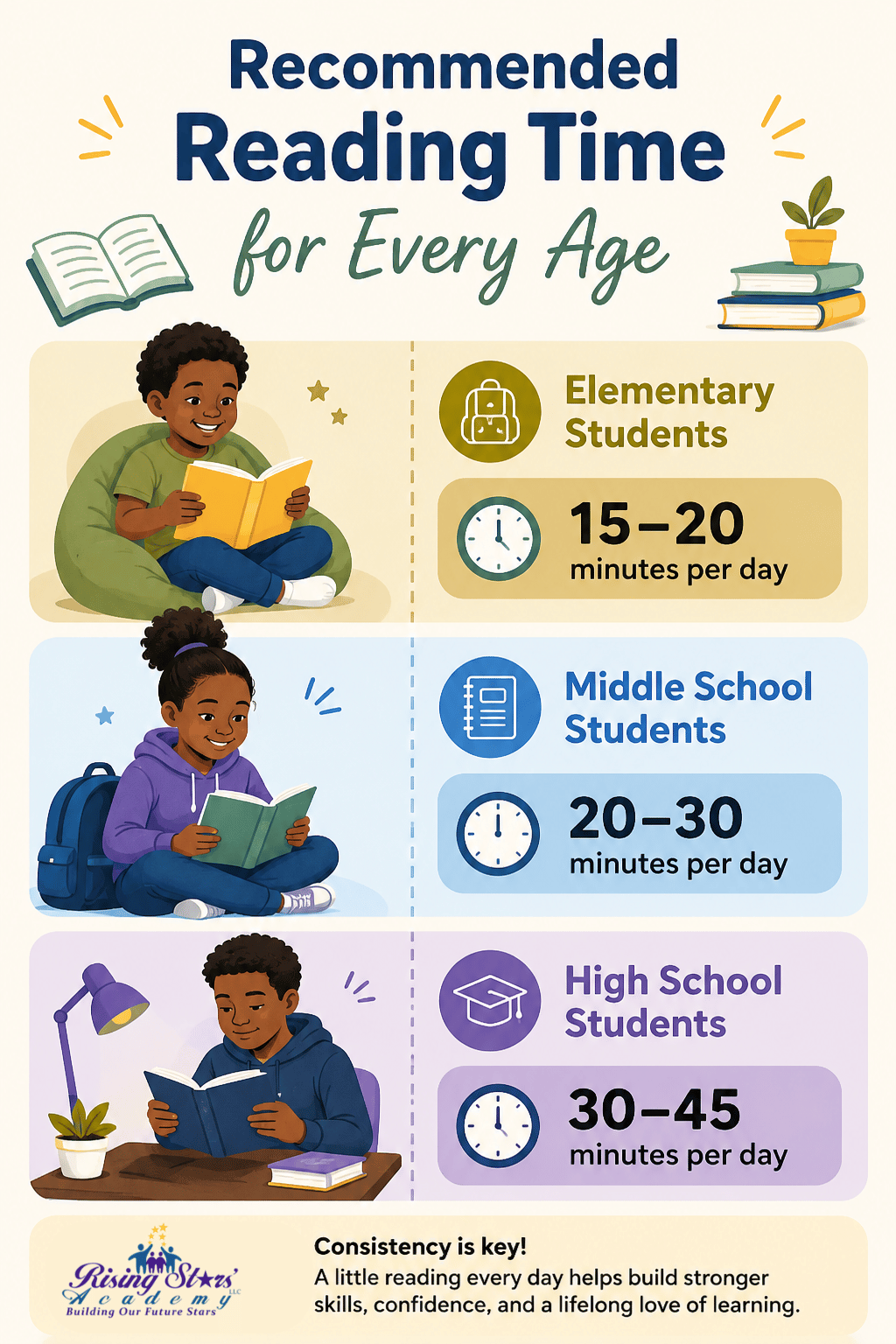
Consistency matters more than long reading sessions.
A little reading every day often produces better results than several hours once a week.
Signs Your Child May Need Additional Reading Support
Consider additional academic support if your child:
Avoids reading whenever possible
Struggles to sound out words
Reads significantly below grade level
Has difficulty remembering what they read
Becomes frustrated during reading activities
Shows declining confidence in school
Early intervention can make a tremendous difference in a child's academic growth and confidence.
Keep Learning Alive This Summer
Summer is filled with opportunities for exploration, growth, and discovery. Reading can open doors to new worlds, spark imagination, and build skills that last a lifetime.
The most successful summer reading programs aren't necessarily the most structured—they're the ones that make children excited to pick up a book.
By incorporating fun, creativity, and choice into reading activities, parents can help children stay engaged, avoid the summer slide, and begin the next school year with confidence.
Ready to Help Your Child Reach New Heights?
At Rising Stars Academy, we believe every child can shine with the right support, encouragement, and individualized instruction. Our high-dosage tutoring programs help students strengthen reading, math, and academic confidence while preparing for long-term success.
Whether your child needs extra support or is ready to excel even further, we're here to help them grow, learn, and thrive.
Learn more about Rising Stars Academy today and discover how personalized learning can help your child become a rising star.
